Wednesday, October 5, 2016

Copyright... Copyright.....


All photos in this blog including the content are all copyrighted. Information has to be provided to the author prior to publication/ broadcast in newspaper and other visual media. Personal usage is permitted for individual use. Failure to inform the author prior to publication will be considered as a Copyright infringement...


Since I have found out that even the local newspaper agency have started publication of my photos for provocative news reports, I am forced to publish this Copyright Notice.

The content of this blog are intended solely for conservational activities. Please stop using these photos for your reports on corruption and criminal activities......


Sorry explorers , but I will have to watermark all my images to prevent unintended usage of these photos......


News in today's Mathrubhumi newspaper without any prior permission or information.....

Saturday, October 31, 2015

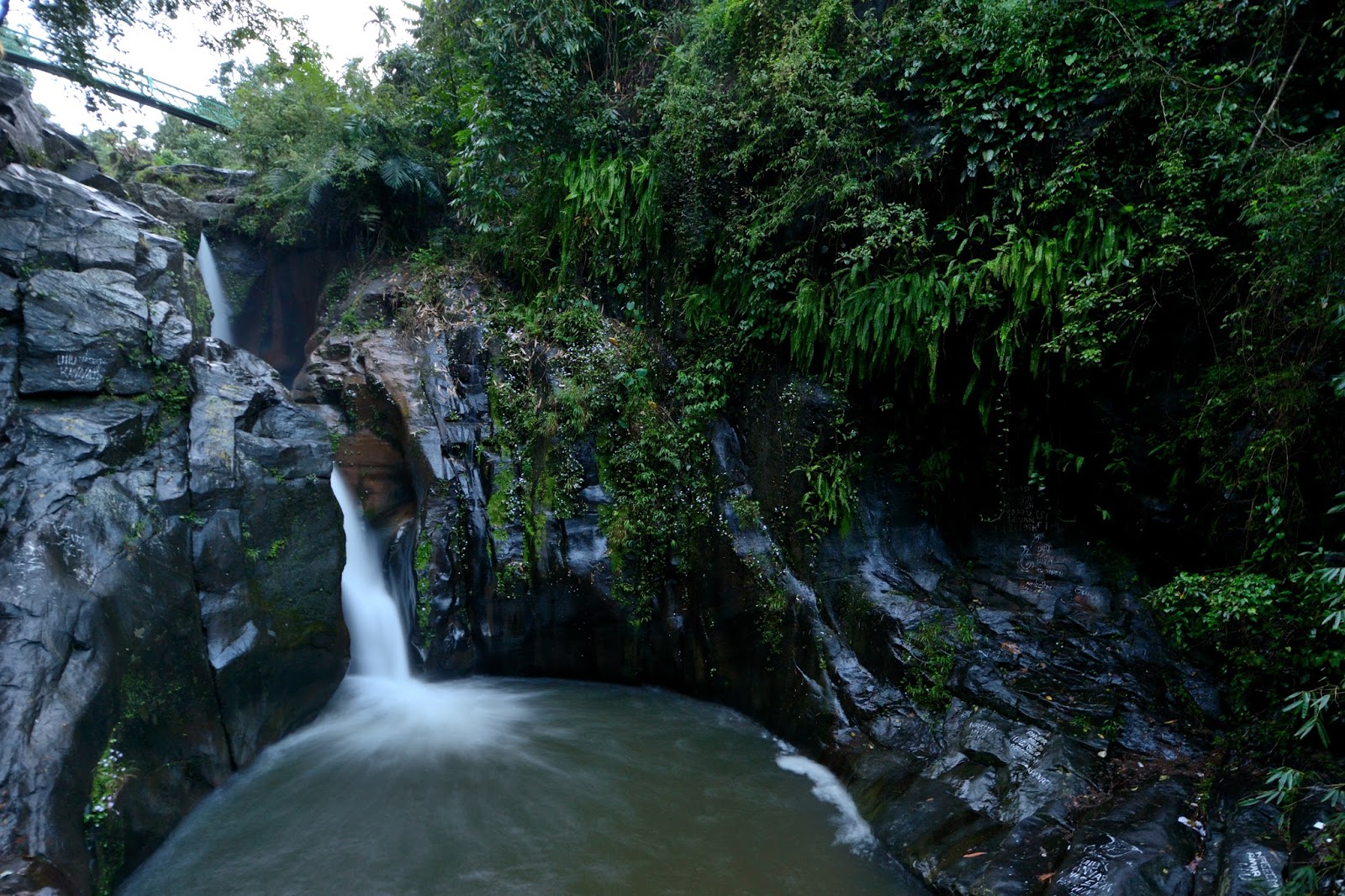
Valley Of Silence - Silent Valley National Park with Kalkundu Waterfalls


View from the top of the watchtower at Sairandhri. A closer inspection can reveal the old suspension bridge ( Look for a shadow )

This is the closest national park to my home in Melattur and is extremely close to the school where I studied from my 1st standard to 10th. I studied in Little Flower Central School , Karuvarakundu from where I could see the peaks of Silent valley. The school is located on top of a hill covered with rubber plantations (Rubber Estates). With the altitude advantage of the hill and the 3 stories below our classroom , we could see the entire Kalkund Valley and the arc of mountains , particularly  the Mt Koomban which is the dominant peak visible from the town.


Keralam Kundu Waterfalls at Kalkundu

Since I was an outstanding student , I had to stand out of the classroom as a punishment for a myriad of reasons. I used to get the company of my friends from the nearby Kalkund valley , to whom I used to ask about their life in the wilderness. They used to tell stories of wild animals roaming around there house , particularly pythons, porcupines, wild boars and elephants. Some of them used to bring quills of porcupines and wild fruits to our class so that we outsiders could have a look at them. At that time a machine that can show an image while typing "Porcupine Quill" was beyond our imagination. We used to enjoy seeing and feeling them as if we were watching Avatar 3D..... :-)

I never believed my Kalkund friends when they used to tell me that some portions of Kalkund is part of the world famous Silent Valley National Park. Only with the advent of Google Maps I could finally understand that the watch tower at Silent Valley is only 9 kilometers away from the Keralam Kundu Waterfalls in Kalkundu. The first time I went to Kalkundu was in 2012 with my cousins. We had to trek through rubber plantations and reach the waterfall climbing vertical cliffs like Spider man.

I was also bitten by a leech on that day. The location though remote and unforgiving , had a lot of young boys who where playing in the water by jumping from the top of the waterfall. It not a very high waterfall , but a mistake from that height is extremely deadly. The rocks below the waterfall are very slippery and the only way to walk is on the sandy floor. The bottom part of the waterfall is infamous for gold nuggets as the Geological Survey of India has classified the rocks around Silent Valley as having high gold content.


Now the Kerala Tourism Development Corporation (KTDC) has funded for the construction of road to the Keralam Kundu Waterfalls along with a bridge for tourists. The bridge was inaugurated by A P Anil Kumar , the tourism minister of Kerala on September 27th 2015. The road to the park is still rocky and an Off road race was conducted in 2014.


Even though the Waterfalls is close to Silent Valley , we cannot go inside it without permission from the Silent Valley National Park office at Mukkali. 2 Kms from the Keralam Kundu Waterfalls , we can reach Poochi Paara ( Poochi = Butterfly/fly  , Para = Rock ). The only way to reach the location for tourists is to circle the mountain and go to the other side of the forest , where the official entrance to the park is situated.


The main entrance to the Silent Valley National Park is situated at Mukkali , Mannarkkad , which is in the Palakkad district of Kerala. From Mukkali , we will have to reach the Silent Valley Information Centre , from where we can choose to go in to the park by bus or jeep or go for a trek. The ticket for one person is 300 Rs as of 31st October 2015. Some times you will also have to pay an entrance fee if you are a foreigner and also will have to take a ticket for your camera.

The park is one of the last natural habitats of the endangered Lion Tailed Macaques (Macaca silenus). This animal was the reason for the Save Silent Valley Movement  of 1977, one of the biggest environmental debates in the world.


Since the park is close to my home I have went there in both jeep and bus. ("Jeep" means SUV in India). The main focus of the trip will be the endangered Lion Tailed Maccaque , which triggered the Silent Valley Movement , one of the greatest conservation struggles of modern era.

Lion Tailed......This is the lion like tail of the macaque

The park is called Silent Valley because of the absence of Cicadas. Most of the park consists of dense evergreen forests and mountains. Some other mammals which we can easily spot in the park are the endangered Nilgiri Langur , which is also endemic to the Western Ghats like the Lion Tailed Macaque , and the Malabar Giant Squirrel. On the way to the park , its easy find another species of macaque that is also endemic to the western ghats. Its the common bonnet macaque , which like to live on the edges of the national park. Malabar Giant Squirrels also are easily seen on the way to Mukkali.


The vehicle will take you only up to Sairandhri , where there is a watch tower. From the top of the watch tower , we can get a better view of the forests around. We can see the river Kunthi , which forms the border of Palakkad & Malappuram districts of Kerala. Since Kalkund is on the other side of Kunthi river , it is located in Malappuram district.


We can trek to an old suspension bridge on the river Kunthi from Sairandhri  through leach infested grounds. Unless you are visiting the park in mid summer , you are almost guaranteed to experience a leach bite. The bite does not hurt like a mosquito or ant bite. The animal will apply a local anesthetic which prevents you from feeling the bite. Don't forget to take some table salt to help you out of leach bites. Once those blood suckers attach to your skin , don't pull the leech by its body. It may regurgitate the contents in its body and may lead to infection. You can either let the leech finish its drinking and let go by itself (SCARY..??) or put some salt over it and then it will let go by itself.


A fallen tree on the way to river 'Kunthi'


Please don't carry small kids to the Kunthipuza trek during rainy season as the kids may get scared and start screaming seeing blood flowing like water from the leech bite. Usually when we get a small cut , the blood will clot within a minute. But leeches have an anti coagulant in their saliva called Hirudin. This means that blood flow after leach bite will look like water flowing out of a punctured water bottle. Leaches are the reason why the nearby town is called Attappadi as "Atta" means leech in Malayalam ( "Attai" in Tamil) so you can expect at least one byte if you are planning a trip to here.

Angry Green Vine Snake On the Way to Sairandhri


I haven't counted the number of bytes I have from around Silent Valley. The first day I went there , I didn't had salt and have got about 20 leaches on my shoes (wet season) , which I managed to snap out of my shoes. about 6 unseen leaches climbed over to my legs and I never knew they where there and saw them only after completing the trip. So far , none of them have become infected or itchy. It will heal in about 4 days and wont even leave a mark.

Jeep Safari with German tourists

Seeing any large animals is based on pure luck. Don't exptect to see large mammals in the park as it is extremely rare. Spotted deers , which you can see in abundance in many other national parks are non existent in these dense evergreen forests. They thrive only in grasslands and deciduous forests. A tiger has its range in the route to Sairandhri . It has marked its territory by claw marks on a tree near the entrance to the core zone.

100 Feet high  Rajeev Gandhi watch tower at Sairandhri

In order to see Lion tailed macaques , you will have to reach the information center by about 7:30 am and go for the first safari. By mid noon , the animals will go to deeper forest and will be less active. If your objective is to photograph animals , go in a jeep and don't go by the bus. For casual visitors , the extra price of the jeep safari is hard to be justified unless you are having a group of 5 to 7 individuals.


Leech Bite - These guys are very very very common and at least one bite is guaranteed if you are to visit Silent Valley with out adequate preparation. For the least , carry a small packet of salt. Unlike a mosquito or ant bite , the bite of a leech is painless as it applies a local anesthetic , which makes you totally unable to sense pain. Even you don't feel it crawling on your body. I have got bitten about 8 times on my last visit. The wounds healed by themselves and didn't cause any discomfort


IMPORTANT:   Always book your visit in advance. Pre book your visit in the Silent Valley Information Centre Phone number. This is one of the few national parks where large scale tourism is discouraged. You will also have to carry food with you as there are no shops once you go inside the park. There are some shops at Mukkali.


Tiger Claw Marks - Tigers mark their territory by standing on their rear legs and putting their body weight on to the front claws creating an up to down scratch mark . This marking along with scent marking is used by tigers to mark their territory. Only some special kinds of trees are used by them as very hardwood trees are harder to scratch with their claws.

A trek to Butterfly Rock in Kalkundu is avilable ( "Poochi para" trek). (7.5 Km)

Old suspension bridge across Kunthi river

Also this jungle is also home to some terrorists called Maoists ,who have recently burned a Forest Department's 4x4 SUV and have attacked KFC Mc Donalds shop in Palakkad. The attack was supposedly a reaction to the corruption by local governments towards tribal people. Encounters between Maoists and police is rare but on the rise during the last two years.

Kunti River


A new special forces team armed with automatic rifles, named "Thunder Bolt" has been trained for encounters inside forests and they where trained in the Jungles of Silent Valley. Their patrol vehicles are some times seen in the roads around Silent Valley.


Anginda Peak 


Saturday, December 15, 2012

Magical Trails - The Karien Shola


Most of the people who are venturing in to the wild usually resort only to a short jungle safari usually conducted in a safari vehicle,which follows a strict safari route. Its easy and safe, as you are armored from the animals outside and the soft and cushy seats will provide you a comfy ride through the wild. This is most suited if you are on a busy schedule or having a family trip with your kids.

 Karien Shola

Unlike the African savannas which all of us might have seen in popular TV channels, where most of the terrain is less treacherous and have less number of trees in the landscape, the Western Ghats has a three dimensional terrain with hills mountains and cliffs making any car/bus safari a nightmare. Moreover,these areas are covered by impenetrable rain-forests and gets covered in fog during a major part of the year.

Malabar giant squirrel  ( Ratufa indica )

In my case,the thrill of being in the wild did not come from any safaris , but through a short trek through the deciduous forests of  Parambikulam to a patch of evergreen Shola forests locally called as The Karien Shola. I never had any experience in trekking through any rain-forests before and it was indeed a very unique experience to me.


It was a holiday for my collage due to 'Srikrishna Jayanthi' , the birthday of the Hindu god Krishna. I was having regular class on the next day and hence couldn't go to my homeland , which was my usual practice. At  Coimbatore, it was power-cut season and the sheer number of power-cuts was too annoying to me (Up to 16 hours per day of electric power blackout did existed in Coimbatore at that time) . Sitting in my room therefore was not an option for me. It was time fore me to execute my plan-B...

So, what is plan-B...?

Take my camera and get lost in the jungles in the neighborhood...:-) Luckily, I was having my camera with all of it batteries fully charged. But still, it was raining slightly on the outside. But the climate got overridden my by over-confidence that the rains would eventually vanish. But I had to reach there to understand that I was wrong.....
As I reached the information center at Anappady , I was surprised to see that I was the only visitor that day. It was raining heavily and was not a tourist season in Kerala. There was no safari that day due to lack of tourists and all I could do was to trek through the jungle trails. I had no other choice and I cashed my bill for the Karien Shola Trail. 
Drosera indica - An insectivorous plant


After having my lunch, I was accompanied by my friend & guide , Mr Sashi , a young and energetic member from the forest department. We started walking from the information center through the tarmac towards the gateway. Then we entered in to a deciduous patch of forest through a rocky terrain. The rain was fairly heavy and the visibility was reducing. We could see two elephants on the way and had to wait for some time until our road was cleared. My guide was trying to clear the route by making loud noises and calls. I was a little scared and did keep a distance from them.

As the route got cleared, we moved on. As we reached the Karien Shola, the rain ceased for a while. The forest canopy became more thick and it seemed as if there was very little light down there. The Shola was filled with thick undergrowth and a multitude of sounds. The guide showed me a Malabar Giant Squirrel, running around on the top canopy. It was very big in comparison to an ordinary palm squirrel found in my house and its sound was so loud. It took a look over us for a moment and I could grab a shot.
Elephants On the road


Suddenly, some thing felt so wrong.I looked at my shoes and OMG my legs were covered by leaches. Some 20 leaches over me and climbing up. I never knew that leaches were so extreme and was not prepared to face them. It was so tough to get off from my shoes and pants. You can never blow them away like a mosquito nor you can pick'em using your hand. I was totally scared seeing them climbing up so fast. The only way I had was to strike them using my index finger repeatedly as if I was playing caroms. The strike has to be delivered just at the very moment they move. Even though, one did grip on my nail and no shaking of  could get it off from my finger. I took my memory card cover and swatted it. Some way I got them off.
My Guide - Mr Sashi

Luckily, I had a good pair of socks and shoes and since I followed the instructions from my guide to put socks over my pants, I was not bitten by any of those blood suckers.They were so big and was dark brown to red in color.The easy way to get rid of them is by sprinkling salt on them. But , I was not expecting them and didn't had any salt with me.
Female Scarlet Minivet  (Pericrocotus flammeus)

As we ventured further, we could see a White bellied woodpecker, the largest of its kind on a tree nearby.Also we could spot birds like the White bellied treepie, Malabar grey horn bill Scarlet minivet,Malabar parakeet,Malabar whistling thrush and many other birds.

Ceylon Frogmouth - (Batrachostomus moniliger)

Sambar deer were also spotted during the trail and we were amazed to find some pug-marks of the majestic Bengal Tiger on our way. From there, he took me to the bottom of a tree,were this pair of Ceylon frog-mouths (Batrachostomus moniliger) were photographed.

Peninsular Rock Agama  (Psammophilus dorsalis)

From there, we started our trek back to the information center. As we moved in to a large open area covered by rocks,I felt as if there is a movement on the rocks. As I looked closer, I could spot a small lizard called as the Peninsular Rock Agama (Psammophilus dorsalis). It is camouflaged as a piece of rock and hence is very tough to find. But there were lots of them on the rocks out here, that it was easy for me to find and photograph them. Moreover, the one that's in the photo was just circling around the same rock even when I chased it for a while.
Indian Pond Heron (Ardeola grayii)

After the trek, as we reached back to the information center, we were welcomed by a pair of Indian pond herons in the garden adjoining the information center. In total, I was charged INR 500 Rs for the trek and a I strongly recommend the trek for everybody who want to experience the tranquility of the evergreen shoals of the western ghats .
  

Friday, December 14, 2012

The Thomman Kuthu Waterfalls Of Thodupuza

Front View Of The Waterfall

After our Eravikulam trip, we moved to our next destination,which is hidden in the remote jungles of Thodupuza. We had to utilize the GPS facility in one of our cellphones to route ourselves to the location. As  soon as we reached our destination,we moved towards the ticket counter and cashed for our entry passes. It costed 10 rs per head and an additional 10 rs was required for my camera. There is a short trek path through the patch of jungle .After a while , we started walking through the narrow path heading towards the waterfall.

 The climate was pretty warm and moist. The place was filled with a multitude of  sounds particularly that of cicadas.As we reached the waterfall,the sounds of the jungle got mixed with the noise of the falling water making it a music to both eyes & ears alike. We decided to chill off the day with a bath in the cool water. We had to skip over some slippery rocks to get ourselves in to the stream.
A small 'waterfall' on the way to the main waterfall

After a refreshing bath, we had a look around and could just see rocks,water and trees. The guards did warn us not to venture further and into the jungle. The daylight was fading as well. So we made our way back to the entrance and then back to our homes.

I wouldn't tell that it is one of the best locations, but still it is one of those destinations which you don't want to miss if you are visiting any of the nearby locations. Its small waterfall and the safer trek path covered by greenery is what you should expect from here. But still if you are for natural beauty, it can be an enchanting paradise.

Monday, September 17, 2012

My Eravikulam Visit No:2


Date: 22nd   May  2012


After an year's gap , I decided to revisit the Eravikulam NP. This time I felt more confident , had higher-end photographic equipment and was backed-up by my college friends for my assistance. They were always there for my assistance and this time ,all the planning were done by them.


We started our trip from my friend Arjun's house located at Kakkanad near Cochin. He was our tour leader, guide and he has got exceptional driving skills. He was having three four wheelers in his house and of them an MM 540 4x4 was the most antique and the most unique. It could easily occupy (8+1) passengers with ease and could handle any terrain with out a problem.

We started our trip early in the morning and reached Eravikulam by 11:00 am . As we reached there, we could see a very looong queue in front of the ticket counter. It was the time when the schools close for the summer vacation in various south Indian states . The crowd mostly consisted of tourists from other countries and states other than Kerala & Tamil Nadu.

After spending more than an hour in the queue , I managed to reach the park through the  mini-bus provided by the Kerala forest department. As soon as I reached the location, I headed towards the main entrance formed by a gate way . From there ,  a guard made a security check of my bag searching for anything suspicious (Warning!....liquor is banned here and can be a snare for U if you carry such items with U...Can easily get u behind the bars....) and checked my entrance tickets.


After the final checkup , I started walking through the short trekking path. I could easily spot a couple of Nilgiri Thars grazing close to the entrance.But the view was rather short-lived. The disappeared in to the adjoining kurinji bush  The initially clear climate started becoming  a bit misty and soon it felt as if the clouds were coming down.There was no sign if them when I started my trip and in no time, the sun vanished out of sight and tiny droplets of water started to fall out of the white sky. The temperature dropped drastically and on every step that I took me further on to the Rajamalai , my visibility got lower and lower.....

I started getting that bad feeling of getting my camera frozen as last time...But compared to that day,the climate was not at all wild at me...:-) That day was in the rainy season and I got embarrassed experiencing the shear fury of the Nilgiris.

This magic equation formulates my previous visit :

Heavy(Rain+Wind+Fog)  =   [Wet (clothes+bag+camera+shoes) + A Torn & Broken Umbrella + Zero Visibility]+ Fatigue for the man and the machine involved


This time , there was no wind and the temperature was not un-bearable. The drizzle was not disturbing either...I made a trek over the tarmac track till its extreme end. I could see the whole landscape around me from that point...could spot few new birds and had a view at the shola forests that in fact , are the forest patches formed in-between two adjoining hills. Also I could get a view of the majestic Aanamudi preak which is of the highest out here and has got its name from its physical appearance as that of an elephant (Aana in Malayalam means elephant)


But still I couldn't photograph the flagship species of the sanctuary.I searched around but there was no sign of them...I tried to get some place to sit on and wait... But the other tourists had already reserved their seats...I moved on cursing them....


On my way down , I was stopped by a small piece of rock that rolled down from the slopes aside me..As I looked above..the Rock-star emerged out of the mist...heads up and looked down straight at me as if it was
the king...That was just the moment I was waiting for...I pulled out my camera and had no time to make decisions over the lens to be used...The camera was mounted with a macro lens (Which is typically used for shooting insects and small subjects) which I did attached to shoot the plants and flowers on the way...I pointed it at the animal and kept on clicking...

I was not ready for waiting for another animal to take another shot...I chased the thar and fired my shots  from a distance...But suddenly , I got surrounded by a family of thar, that emerged out of the bush and they felt to be so comfortable even in our presence and did even tasted my lens amazed by its reflection on the glass elements...:-)

After spending an hour or two, I trekked myself downhill  and back to the bus stop. While waiting for the bus to come for my pickup, I was amazed seeing one of the senior forest guards who was disposing  the  tourist leftovers in the bush, in to the trash-bins as a measure to prevent the littering of the forest area .
Note that most of the tourists here are well educated and highly qualified people...I don't know what makes these people to misbehave in such a protected area. More over , the animals can get irritated by the tourists who touch and groom them without understanding that the horns on thar are not just meant for a fancy...
Any time they could be put in to action. Its only due to such devoted protectors that these iconic creatures thrive in these rocky and mountainous terrain and definitely the Nilgiri Thar is the Rockstar Of these Rockies.....


Eravikulam National Park


                                                                                                                                                          Text & Photos by N.A.Varun


Since my childhood, I used to hear about the Nilgiris, which literally means means 'Blue Mountains'. They are called so because, once in 12 years, the neela kuruji plant flowers to produce a blue flower. These flowers along the western ghats will make them look as if they are covered by a beautiful blue blanket.The kurinji flowered last in 2006 and Eravikulam National Park was the focal point of tourists as the park witnessed the flowering in a larger area.

But in 2006 I was doing my school and was doing my 10th standard education. I remember reading about the kuriji bloom in the news paper. But I was not bold enough to take such long distances.Hardly,I missed that chance and will have to wait till 2018. There is also an information that another bloom will occur in 2014 as there are more than one species of kurinji in the western ghats. Next time, I won't be missing the chance again.

A small herd of Nilgiri Thar. The black line on their back is often mistaken as the reason behind their local name as 'Varayadu' .The real source of name is from Tamil,where varai means cliff and Aadu meaning goat. It is currently the state animal of  Tamil Nadu

Its not just that the Kurinji bloom that you would miss, if you have never visited Eravikulam. You will also miss the beautiful shola forests, grasslands and the mountains of  Rajamalai. In addition , you will miss a chance to see the Nilgiri Thar, an endangered species of mountain goat , which is endemic to the Nilgiris.The park is home to the largest population of this unique species.Thar's live in rocky terrain and can easily move over the steep and slippery rocks that even mountaineers will find extremely hard to get through. They are known for their capability to take on extreme terrain. Because of this, Mahindra Motors,one of the popular Indian automotive company have given the name 'Mahindra Thar' for their SUV, which is ment for the extreme offroaders.

The forest patches formed between two adjacent hills are called shola forests. They are home to unique species and house a verity of birds,reptiles and mammals.The formation of these forests is still of a debate between the various scientists and naturalists.These forests are of great abundance in the Eravikulam  NP.
A Thar fawn 


On my first trip to Eravikulam, I was accompanied by my friend Arjun K.P. It was in the monsoon season and we started our trip at 6:30 am from Coimbatore.We went to Pollachi and then to Udumalai. From Udumali , we had our breakfast from and entered the Munar bus. The bus goes from Udumali to Chinnar,Marayur,Eravikulam & finally to Munnar . After Chinnar, the route was full of rain forests and tea estates. By 12:00 Pm, we reached Eravikulam information center. The bus stopped right in front of it and we got down. Munnar is still at about 10 kms from Eravikulam.

There was a large queue in front of the ticket counter. The entrance to the park is by a mini bus. The ticket charge was Rs 35 and Rs 25 for still camera. After getting into the bus, I made my camera ready for action. We could see two herds of Nilgiri Thar with fawns, on the way. The climate was very cold ,foggy and rainy. It caused my camera to get cold. But had no problem until we got down at the visitors rest house at Rajamalai.. Due to fog, visibility was vary low and I couldn't get any landscapes in my frame.My umbrella got snapped and was destroyed in the wind. We moved into the photo gallery . From the inside, we put on our sweaters to protect us from the extreme cold.
Inside the photo gallery of Eravikulam NP

As the rain stopped, we trekked through the mountain ways. It was very cold and we were shivering in the cold with our sweaters on us. We could see a small Thar in the bush while we were trekking. I took out my camera and as I clicked, some thing felt very wrong. Yikes! I got mirror lock syndrome to my camera. The camera was frozen due to the extremes of temperature. It could no more take any photos. It sounded like it went crazy. The mirror was rattling non-stop inside, but no photos were taken and an 'Error' message appeared on my LCD screen which made me shivering with fear of the damage done to my equipment.

Still we trekked further and after reaching the end of the permitted route, we returned back.I thought that the camera would work after a few minutes. But it never did.By the evening,we reached back to the bus stop and entered a local bus to marayur as there were no direct buses back to Udumalai at that time. The bus was full of people and we couldn't get a seat. The roads were narrow and was not tarred well, making the  bus shake inside. I felt like I was about to vomit. I was praying to god to take me to to my destination fast. Suddenly, we could hear an explosion. The bus stopped and I could understand that the bus tire got punctured. Everybody got down and tried to catch the next bus. But not many buses are there in the route.

I was feeling very sick and I vomited out my lunch.My friend gave me water and told me that he was feeling the same too. We ate a sweet stuff called by the name "Home Made Chocolate" from the tea shop near by the ticket counter. That was probably the only thing which could have made me sick. At that instant itself, I took the packet out of my bag which contained the remaining amount of it and trowed it out in to the road with anger.

1 hour passed by and then another bus passed by us in the opposite direction. That  bus gave their stepney tire to our bus and after changing the tire, we moved to Marayur. From there, we could see a Munnar- Banglore express bus which had almost twice the ticket charge as compared to the local buses. The conductor told us that there are not many local buses by that time. So we got in to the luxury bus and was taken to Udumalai. I had a good sleep in the bus. After reaching Udumalai, we went back to our homes.

The trip was probably the most adventurous trip in my life.


  • I was caught by viral fever and was admitted to hospital and was having a temperature measuring 103 degree Fahrenheit.
  • My camera was damaged for the first time ever. I sent it to the service center and it took about 1 month to get it back to my hand.
  • The camera lens got affected by fungus as it got wet in the cold and wet climate and was required to be cleaned.
After that unforgettable experience of walking in the clouds (thick fog) and facing unexpected accidents , I learned my lesson to be more cautious while traveling to and through such unpredictable places.


Topslip & Parambikulam National Park


                                                                                                        Text & photos  :  N.A.Varun

Gaur- The flagship species of the sanctuary


The Parambikulam Wildlife Sanctuary is located in the Palakkad district of kerela. The park is located in the Anamali hills and shares boundaries with the Indiragandhi National Park in Tamil Nadu . The entrance to the park is through Tamil Nadu. Limited number of  Buses are available from Pollachi, the nearest town located in Tamil Nadu. Buses start from Pollachi at 6:10 am,10:00 am (KSRTC)  & 3:00 pm. There is also a bus at 11:30 am to Topslip, the nearest bus station to access the Indiragandhi National Park.
View from the hill - Topslip


The Topslip & Parambikulam forest offices are seperated by < 5 kms , but you wont be allowed to cover the distance on foot .

Apart from being a wildlife photographer, I am also a student of engineering (EEE). My collage is located in Coimbatore disrict near to Pollachi. With my friend Arjun K.P. ,a conservationist from Kerala. In our first trip, we got into the 11:30 am bus. The bus looked old  from the outside and was painted in green. We got in to the bus and asked for a 'Parambikulam' ticket. The conductor told me in Tamil that the bus wont go to parambikulam now. It will go only up to Topslip and will return. Then the same bus will be going for another trip at 3:00 pm. He told me to enter in the bus when it reach Topslip again at 4:30. He also told that I will be able to see animals on the way.


Topslip


While the bus was travelling from Sethumadi to Topslip, two travellers were argueing inside the bus. One was a n old woman who sell Murukku  at Topslip and the other was a young man. Very less number of travellers were there in the bus. We watched the fight silently. Thn one of the fellow travelers scolded them and put an end for the fight.Later only we understood that the lady was the young man's mother. "Its looking like everything is getting wild past Sethumadi....",my friend sighed.
Bonnet Macaque 


He was true. The landscape became more filled with thorny trees, the temperature dropped , the lighting started to become dim. Only the sound of the bus was audible. We entered in to the jungle.Signboards with pictures of tiger and gaur were placed along the sides. We peeped out to the wilderness around us through the rusty windows of the grandfather bus.We traveled through hills covered with bamboo and teak.As we reached on top of the hill, we could see a check post.  A troop of  bonnet macaques were playing near the check post. We started seeing some people and a few buildings. That was the main office building of the Tamil Nadu Forest Department.
Spotted dove from the herbal garden - Topslip


The bus stopped at a bus stop and turned to go back to Pollachi. We got down.Only BSNL is having mobile phone network coverage up in here. The forest office building was having a canteen, a small museum    and an open restroom for having lunch. We went in to rest room which looked like a shed. We started eating the parippu vadi that we brought to eat from the bus. Suddenly, I saw my friend jumping up from his seat."Monkey!" he cried. A bonnet macaque took one vadi . "Why you gave food to that monkey? Now other monkeys will also come to disturb us...." one tourist from our state shouted in anger. We stood puzzled.

After our lunch(vadai), we moved out to see the things outside. We moved in to the bamboo forests and a temple nearby the restroom. We saw some Nilgiri Langaurs that were jumping and howling on the trees nearby the jungle. Compared to the machaques, the langaurs are larger in size and prefer high above the forest canopy. But they are less aggressive and more peaceful.

Nilgiri Langaur

A grassy hill was there in front of the bus stop. We moved on to the hill and near to a building on the top of it. Then we went to see the Machan tree houses and the herbal garden.Then we went in to the mini meusium where some stuffed animals along with the bones and remains of some animals. The only thing that I was interested among the jarred animals was a travancore flying squirrel .Any way , the museum is free of any charges so you can enjoy the views inside.

Roads through the jungle
In the evening, we went to parambikulam in the bus we came.We saw some spotted deer and  a wild boar.The bus was cruising through the jungle. So by the time I could aim my camera at any animal, it will be gone.In short , we could see less and photograph less in the bus journey .Cursing the bus,we went back to Pollachi and to our room. In short, dont think of a parambikulam trip on the transport bus.   


The elephant on the road is actually a sticker on the wind shield of the bus. You can also see a deer and the words saying 'Topslip' along with it.

Old photo of mine - Topslip

Years passed by. Again another boring weekend. I had my camera with me. I ringed to another friend for my company. He was a naturalist from Chitwan , Nepal . He agreed and this time we went well prepared. We got up early and catched  the first bus to Parambikulam. We reached there early and the jungle was just waking up. We reached Parambikulam information center and got down there. Then we took 150rs ticket per person for the bus safari. And entered the mini safari bus. As the bus got full, the safari  was started. A guide warned us to be careful to avoid leaches while moving through the grassy terrain.
The bus started gaining momentum.


We were sitting in the rear seat. I started to unpack my bag to gain access to my camera. The rear seat was shaking . Coupled with the poor roads inside the forest , I was thrown up of the seat as the bus was moving.
Suddenly, the sunlight started fading and water droplets started falling from the sky. I could feel a cool touch on my back. Yikes! .It was a big drop of water. The bus was having holes in-spite of its new look.
I moved away to prevent my camera from getting wet.

We could see large herds of Spotted deer(chithal) on the move. It felt like they are just everywhere. The bus stopped once and then never stoped in front of the other chithal herds.


Many peacocks were also roaming nearby the roads.

Then we saw a herd of Gaur, the flagship species of Parambikulam WLS.

Further moving we came across many herds of spotted deer and some sambar  deers.

We could see some wild dogs (dhole)on the road.


We also saw a big owl, but couldn't get a good photograph of it.

On the way, we could also see the "Kannimara Teak" the largest living teak tree in the world.

We also saw the beautiful Parambikulam Dam and the Thunakkadavu dam.

On the way to Parambikulam dam, there was a big Ashoka Piller and many small tea shops with the names of trees. We had tea and by that time, the sunlight came back.That's the climate here. At anytime the climate can change and expect a rain always.
My co travelers taking photo at valley view point. The bus near them is our safari bus

As our safari in Parambikulam came in to an end, we moved out of our bus and started exploring the parambikulam information center and nearby areas. The guards here are helpful and co-operative. They will give the necessary guidance for you. A nice canteen is there next to the information center. I could see a large heard of spotted deer and a troup of bonnet macaques nearby the gate. After having tea and snacks, we moved out. We saw a shop for selling Parambikulam T-shirts,caps,honey,photos,stickers etc. An A.C. T.V room is also provided showing wildlife filims (No need of paying any charges for seeing the T.V. Its included in the safari ticket).We brought some stickers for 10 Rs and moved to the bus station.


 The bus station was near by the information center.I went there just before Onam festival which is the most important festival of Kerala. So I could hear the chief forest officer warning the guards not to take leave as the time is also the most crowded time for the sanctuary.

The  bus came at about 1:00 pm and we entered in the KSRTC bus and got down at Topslip. We went for the safari and saw a sambar deer and a wild elephant. The vehicle took us to an elephant camp inside the forest where the Elephants are taught the leasons in guarding forests and people. The trained elephants are called Kunki elephants. They are free to roam without any chains in the nearby forests.
Me at the elephant training camp at Topslip

 By the time we returned from the safari, we could see a large herd of chithal on the grassland in front of the forest office. They seemed to be un disturbed by the many tourists who were looking at them. We could see many birds at that time. Wild boars were running through the area.
Sunset at Parambikulam
The sunlight started fading away making photography tough. We moved in to the bus stop and the bus came on time. On our way back to our room, my friend said " This place is just amazing. When can we go again?". I couldn't answer him. Because,I was about to ask the same question to him.....